


Ice Scream 8: Final Chapter
4.61.31K Reviews
App Specs
- Version
- 2.2.15
- Updated On
- License
- Free
- Downloads
- 10,000,000+
- Developer
- Keplerians Horror Games
- Categories
- Arcade
- Platform
- Android, iOS
Screenshots
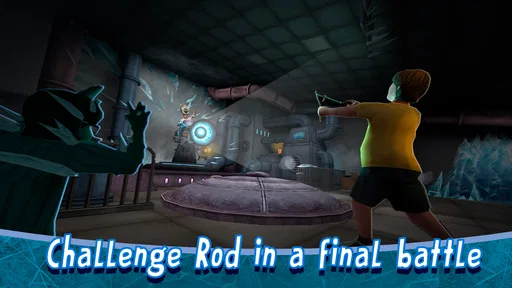
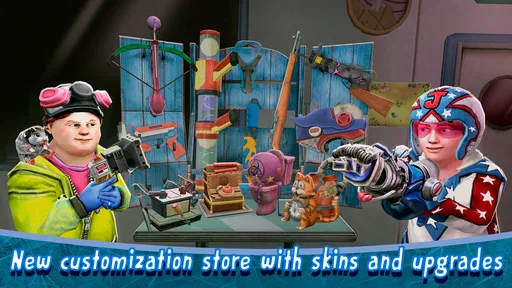


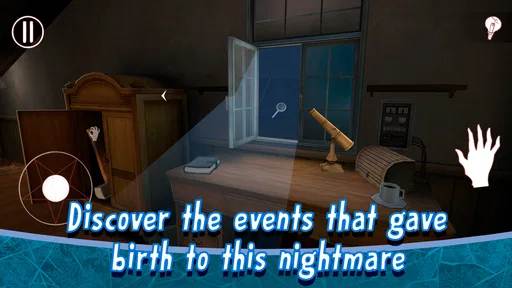

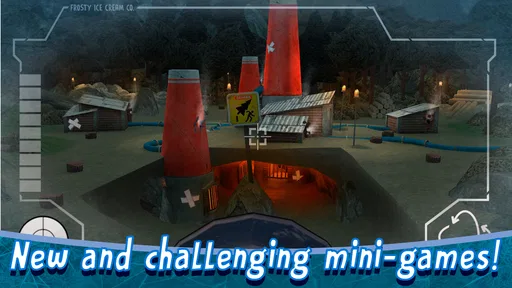
 Analysis by AppCompare
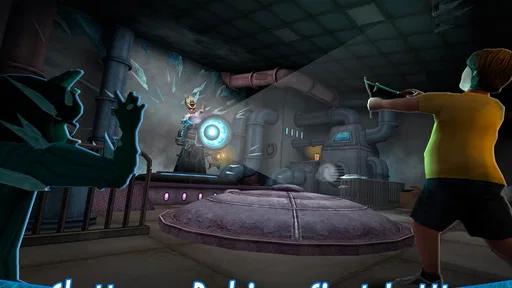
I went into Ice Scream 8: Final Chapter expecting another quick horror escape, but its strongest quality is how quickly it gives a short play session a clear purpose. You enter the factory knowing that the story is moving toward a conclusion, and the central goal is easy to understand: explore the location, survive Rod’s plans, and help bring the Ice Scream storyline to an end. That direct setup makes it a comfortable choice when I want something more focused than a large open-world game.
This is an arcade game from Keplerians Horror Games, built around tension, movement, observation, and the familiar danger of being caught. It is free to start, carries a Teen content rating, and has reached more than ten million installs. Those figures make sense to me: the game is approachable enough for casual players, but its horror atmosphere gives it more personality than a typical pick-up-and-play arcade title.
What I like most is that it does not require a huge commitment before the game becomes interesting. I can begin a session, understand what I am trying to accomplish, and decide fairly quickly whether I have the concentration for another attempt. That matters for a mobile horror game, because long stretches of wandering can make tension disappear. Here, the factory setting gives the experience a stronger sense of direction, even when I need to slow down and search carefully.
Why the factory works so well in short sessions
The factory is more than a background for the final chapter. It gives the game a practical rhythm: move through an unfamiliar area, notice useful details, work out what belongs together, and avoid turning a quiet moment into a dangerous one. I found that the best sessions were not necessarily the longest ones. A focused attempt during a break often felt more satisfying than playing while tired and repeatedly making careless mistakes.
The opening minutes are especially important. A mobile game has to earn attention quickly, and this one benefits from its simple objective. I do not need to learn a complicated character build, manage a large inventory system, or memorize a long list of controls before I can begin. The appeal is immediate: explore, stay alert, and make progress through the factory.
That simplicity also makes it suitable for players who enjoy horror but do not want a full console-style production. The game gives me a reason to keep moving without burying the basic idea under layers of menus. If you have played earlier Ice Scream games, the final-chapter framing adds extra motivation because the setting feels connected to a larger conflict. If you are new to the series, the direct objective still gives you a usable starting point.
There is a useful trade-off here. The straightforward structure makes the game easy to enter, but it also means that players looking for deep customization or a broad role-playing system will not find that kind of variety. This is an arcade horror experience, not a long-form management game. Its pleasure comes from making the next decision under pressure rather than building a powerful character over many hours.
Worth Reading Before You Choose

EA SPORTS FC Mobile 26 Is a Bigger Football Game, but It Takes Time

Flipboard Shows What News Apps Must Do Beyond the Feed

Switching to Android Auto Means Rethinking Your Driving Routine

Google Calendar Makes a Crowded Week Easier to Manage

Ludo King Makes the Most of the Minutes Between Plans

Baby Panda World Brings Quick Play to Modern Phones, but Its Game Library Feels Busy
A practical way to approach each attempt
I recommend treating each run as a small investigation instead of rushing from room to room. When I move too quickly, I tend to miss visual clues or put myself in a worse position. A better routine is to scan the area first, remember where I entered, and then test one possible route at a time. This sounds basic, but it changes the experience from random chasing into deliberate exploration.
One of the more useful habits is to separate discovery from escape. When I find something that looks important, I try to understand its purpose before immediately carrying on. That reduces backtracking and helps me recognize which parts of the factory are safe enough for a quick return. It also makes a short session feel productive even when I do not finish the current objective.
Another small but valuable tip is to avoid playing with half my attention. The game works best when I can listen and watch the environment rather than treating it as background entertainment. A casual player can enjoy it, but the tension depends on noticing changes and reacting before a mistake becomes expensive. In that sense, it is casual to start but not always casual to master.
How the session rhythm feels on a phone
The game is at its best in compact bursts. I can play for a limited period, make a little progress, and stop without feeling that I have abandoned a huge strategy plan. That makes it a good companion for a commute, a waiting room, or a quiet evening when I want a game with a clear beginning and end to each attempt.
A realistic example is a short break between tasks. I might begin with the goal of checking one area of the factory, solve part of an objective, and then stop before rushing the next section. Because the game is built around attention and danger, ending after a meaningful discovery feels better than forcing myself to continue while distracted. I would not recommend starting a tense section if you know you will need to put the phone down immediately, but the overall structure handles brief play better than many story-heavy alternatives.
The immediate pleasure comes from the combination of movement and uncertainty. Even when I know the general purpose of a location, I still have to decide whether to investigate now or return later. That decision is small, but it gives the game energy. It is more engaging than an arcade title that simply asks me to repeat the same action at a faster pace.
At the same time, the tension can become less enjoyable when I am playing without enough patience. Searching for a route while being pressured is interesting; searching repeatedly because I forgot a detail is more frustrating. The game rewards calm observation, so players who prefer constant action may find some sections slower than expected.
Stopping and coming back without losing the mood
Interruption tolerance is one of the most important things I consider in a mobile game. In my experience, this title is easier to return to when I stop at a natural point: after checking a room, understanding the next task, or reaching a moment where I know what I want to try next. Stopping in the middle of a tense sequence makes the return less comfortable because I have to reconstruct my situation before I can act confidently.
For that reason, I use a simple pause-and-return routine. Before leaving, I mentally note the current objective, the last area I explored, and the direction I planned to take. That preparation is surprisingly helpful. It prevents the common mobile problem of reopening a game and spending the first few minutes wondering what I was doing.
The game is not the ideal choice for someone who wants every session to be completely interruption-proof. Horror exploration depends on context, and losing that context can weaken the atmosphere. Still, compared with a long competitive match or a real-time multiplayer game, it is much easier to fit around an ordinary day because I control when I attempt the next piece of progress.
Parents should also keep the Teen rating in mind. The horror presentation and pursuit-focused tension will not suit every younger player, and I would not choose it for a child who is sensitive to frightening scenes. For older teens and adults who enjoy mobile suspense, the rating feels like a useful warning rather than a barrier.
Where the free model helps and where it can distract
Being free makes the game easy to try, which is important for a title whose appeal depends heavily on personal tolerance for horror and repeated exploration. I can see whether the factory atmosphere works for me without committing money at the start. The game includes optional purchases ranging from under a dollar to amounts above fifty dollars per item, so I would approach those choices carefully rather than assuming that spending is necessary for enjoyment.
My advice is to play enough to understand the basic rhythm before considering any purchase. If I am already enjoying the investigation, the free starting point provides a fair way to judge the experience. If I am bored by searching or dislike being pursued, buying something will not fix the underlying mismatch. That is a broader lesson for this kind of game: convenience can reduce friction, but it cannot replace the satisfaction of solving and surviving the factory’s challenges.
The free entry also makes it easier to recommend to friends with different tastes. Someone who normally avoids large games can test it without a major download commitment in their budget, while a horror fan can use it as a focused mobile alternative. I would still keep spending limits in mind, especially on a shared device, because optional purchases can change how comfortable the experience feels for different households.
How much replay value is really here?
Replay value is more complicated than simply asking whether I can start the game again. The first attempt benefits from uncertainty: I am learning the factory, judging danger, and discovering how the objectives connect. Once I understand those elements, some of the surprise naturally fades. That means the strongest reason to replay is improving my route and decision-making, not expecting the first-time mystery to remain unchanged.
I find replaying worthwhile when I know I handled a section poorly. A second attempt lets me move with more confidence, waste less time, and test whether a different approach makes the same area easier. That is satisfying for players who enjoy refining their performance. It is less compelling for someone who only wants a new story every time they open a game.
The final-chapter framing also affects replay expectations. A concluding story gives the journey a stronger sense of purpose, but it can make the first completion feel more definitive than an endlessly expandable arcade game. I would choose this for a focused horror campaign and occasional revisits, not as my only mobile game for months of daily play.
Compared with endless runners, it offers less automatic replay because the pleasure is not based on chasing a higher score through an ever-changing stream of obstacles. Compared with puzzle games, it adds more pressure and atmosphere but may feel less relaxing. Compared with larger survival-horror games, it is easier to pick up and less demanding in terms of time, although it does not aim for the same depth or scale. That middle ground is the reason I think it works on a phone.
Performance expectations and who should skip it
The current version is 2.2.15, and it supports devices running Android 7.0 or later. That gives the game a broad technical reach, but compatibility alone does not guarantee that every phone will feel equally comfortable. Horror games depend on responsive controls and clear visual information, so I would keep the display clean, close unnecessary distractions, and make sure the phone is not struggling with other demanding tasks.
I would skip this game if I want a peaceful title that can sit in the background while I watch something else. Its strengths disappear when I am not paying attention. I would also look elsewhere if my priority is competitive play, deep character progression, or a large social community. This is a solitary, story-driven arcade experience whose value comes from atmosphere and personal decisions.
I would recommend it to someone who likes being given a clear objective but still wants room to investigate. It is especially suitable for a player who enjoys the feeling of learning a threatening location and gradually becoming more capable inside it. The game is also a sensible choice for a fan of Keplerians Horror Games who wants to see the factory story reach its closing chapter.
One limitation I noticed in this style of design is that patience matters more than raw speed. If you prefer immediate rewards every few seconds, the searching and cautious movement may feel like a delay. I see that as a deliberate trade-off rather than a flaw, but it is still worth knowing before installing. The game asks me to pay attention, and it can feel demanding when I only have the energy for something effortless.
My casual verdict
After spending time with it, I see Ice Scream 8: Final Chapter as a good fit for short, attentive horror sessions. It gives me an immediate reason to play, a setting that supports exploration, and enough pressure to make ordinary movement feel meaningful. The factory is most enjoyable when I approach it as a series of small decisions rather than a race to the ending.
Its biggest strength is clarity. I generally know what kind of progress I am trying to make, and I can turn a short break into a complete mini-session instead of entering a huge system with no obvious stopping point. Its biggest weakness is the same focus: once the mystery is familiar, replay depends heavily on whether I enjoy refining routes and avoiding mistakes.
The strong reception is reflected in a 4.6 average from roughly seventy-nine thousand ratings, with around one thousand three hundred written reviews. I would not treat that as a substitute for personal taste, but it matches my impression that the game has found a broad audience among mobile horror players. The free price makes trying it straightforward, while the Teen rating and optional purchases are worth considering before handing it to a younger player.
My recommendation is simple: try it when you want a focused horror game that respects short sessions, but do not choose it for endless variety or completely relaxed play. I would suggest starting with a quiet attempt, learning the factory instead of rushing it, and deciding about any purchase only after the basic rhythm has clicked. For me, that makes the final chapter a satisfying casual pick: direct enough to enter quickly, tense enough to hold attention, and honest about the fact that its replay value comes from mastery more than unlimited novelty.
Pros
- Strong sense of progression with new areas and objectives to explore.
- Atmospheric sound design makes chases and discoveries feel more intense.
- Puzzles offer varied interactions instead of relying on a single solution type.
- Story scenes provide a satisfying conclusion for players following the series.
- The colorful visuals remain clear and appealing on modern mobile screens.
Cons
- Some puzzles can feel unclear without trial and error or repeated exploration.
- Chase sequences may become frustrating when enemy behavior feels unpredictable.
- The game can require frequent backtracking between distant locations.
- Performance may vary on older phones
- especially during busy scenes.
- Players unfamiliar with earlier chapters may miss important story context.
FAQs for Ice Scream 8: Final Chapter
What is Ice Scream 8: Final Chapter about?
Ice Scream 8: Final Chapter is a first-person horror adventure that continues Rod’s terrifying story. You explore familiar and new locations, solve environmental puzzles, collect useful objects, and try to escape dangerous encounters. The game focuses on suspense, stealth, and story progression rather than constant combat, making observation and careful planning essential as you uncover what happened to the characters.
Is Ice Scream 8: Final Chapter suitable for children?
Although the game uses cartoon-style graphics, it contains horror themes, frightening scenes, chase sequences, creepy sound effects, and moments designed to create tension. It may be too intense for younger children or players who dislike jump scares. Parents should check the age rating available in their region and consider whether the player is comfortable with suspenseful horror gameplay before installing it.
Can I play Ice Scream 8: Final Chapter offline?
The main gameplay experience is generally designed to be enjoyed without a constant internet connection once the game has been installed. However, an internet connection may still be required for the initial download, updates, advertisements, cloud-related features, or in-app purchase verification. Availability can vary by device and version, so it is best to launch the game once online before relying on offline play.
Does Ice Scream 8: Final Chapter cost money to download?
The game is commonly offered as a free download, but the exact availability, advertising, and purchase options can differ between Android and iOS and may change over time. Optional purchases may provide benefits such as removing advertisements or unlocking certain conveniences. Always review the store listing and purchase details carefully, especially if the device is shared with children.
What devices are needed to play Ice Scream 8: Final Chapter smoothly?
Ice Scream 8: Final Chapter requires a compatible Android or iOS device with enough free storage for the installation and additional game data. Performance depends on the phone or tablet’s processor, memory, graphics capability, and operating-system version. Older devices may experience longer loading times, reduced visual quality, or occasional slowdowns, so updating the system and closing background apps can help.


